 Md. Ashraful Islam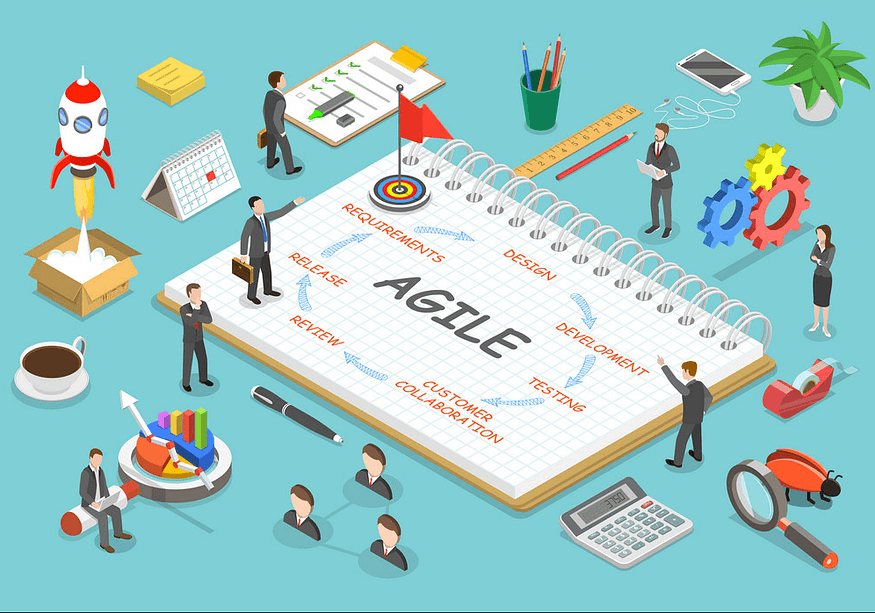
What is Waterfall methodology?
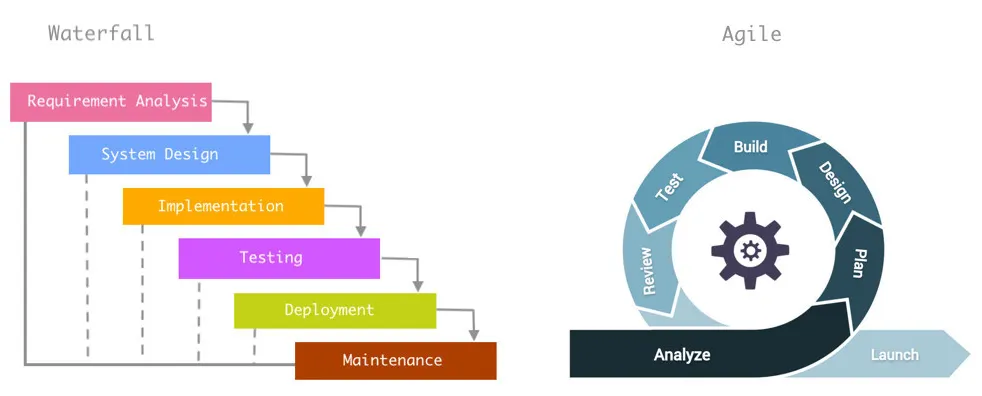
The Waterfall Model methodology is also known as Liner Sequential Life Cycle Model. It is followed in sequential order, and so the project development team only moves to the next phase of development or testing if the previous step is completed successfully.
What is Agile methodology?
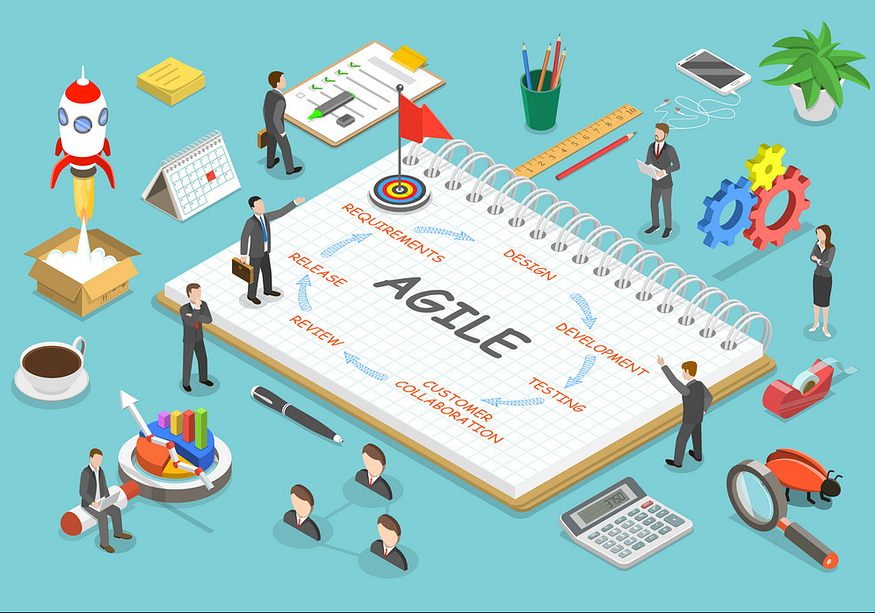
Agile is an iterative approach to project management and software development that helps teams deliver value to their customers. Agile Methods break the product into small incremental builds unlike a single build in the waterfall methods. These builds are provided in iterations.
What is Agile Software Development?
The Agile software development methodology is based on iterative development, where requirements and solutions evolve through collaboration between self-organizing cross-functional teams to turn a vision for a business need into software solutions.
Agile software development life cycle
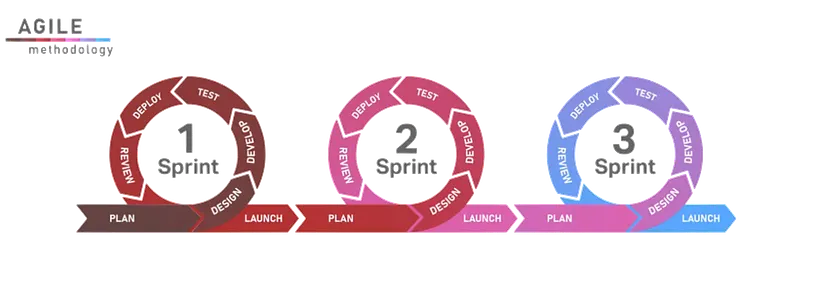
The Agile software development life cycle consists of six phases, each phase contains numerous iterations to refine deliverables and deliver great results.
1. Concept
In the concept phase, the product owner will determine the scope of their project. The product owner will discuss key requirements with a client and prepare documentation to outline them, including what features will be supported and the proposed end results. In the concept stage, the product owner will also estimate the time and cost of potential projects. This detailed analysis will help them to decide whether or not a project is feasible before commencing work.
2. Inception
Once the concept is outlined, it is time to build the software development team. A product owner will check their colleagues’ availability and pick the best people for the project while also providing them with the necessary tools and resources. They can then start the design process. The team will create a mock-up of the user interface and build the project architecture. The stage involves further input from stakeholders to fully flesh out the requirements on a diagram and determine the product functionality.
3. Iteration
This phase tends to be the longest phase as the bulk of the work is carried out here. The developers will work with UX designers to combine all product requirements and customer feedback, turning the design into code. The goal is to build the functionality of the product by the end of the first iteration or sprint. Additional features and tweaks can be added in later iterations. This stage is a cornerstone of Agile software development, enabling developers to create working software quickly and make improvements to satisfy the client.
4. Release
The product is almost ready for release, the quality assurance team needs to perform some tests(system/integration testing) to ensure the software is fully functional. These Agile team members will test the system to ensure the code is clean — if potential bugs or defects are detected, the developers will address them swiftly. User training will also take place during this phase, which will require more documentation. When all of this is complete, the product’s final iteration can then be released into production.
5. Maintenance
Once the software is fully deployed and made available to customers, it moves into the maintenance phase. During this phase, the software development team will provide ongoing support to keep the system running smoothly and resolve any new bugs. They will also be on hand to offer additional training to users and ensure they know how to use the product. Over time, new iterations can take place to refresh the existing product with upgrades and additional features.
6. Retirement
There are two reasons why a product will enter the retirement phase: either it is being replaced with new software, or the system itself has become obsolete or incompatible with the organization over time. The software development team will first notify users that the software is being retired. If there is a replacement, the users will be migrated to the new system. Finally, the developers will carry out any remaining end-of-life activities and remove support for the existing software.
The Agile Manifesto
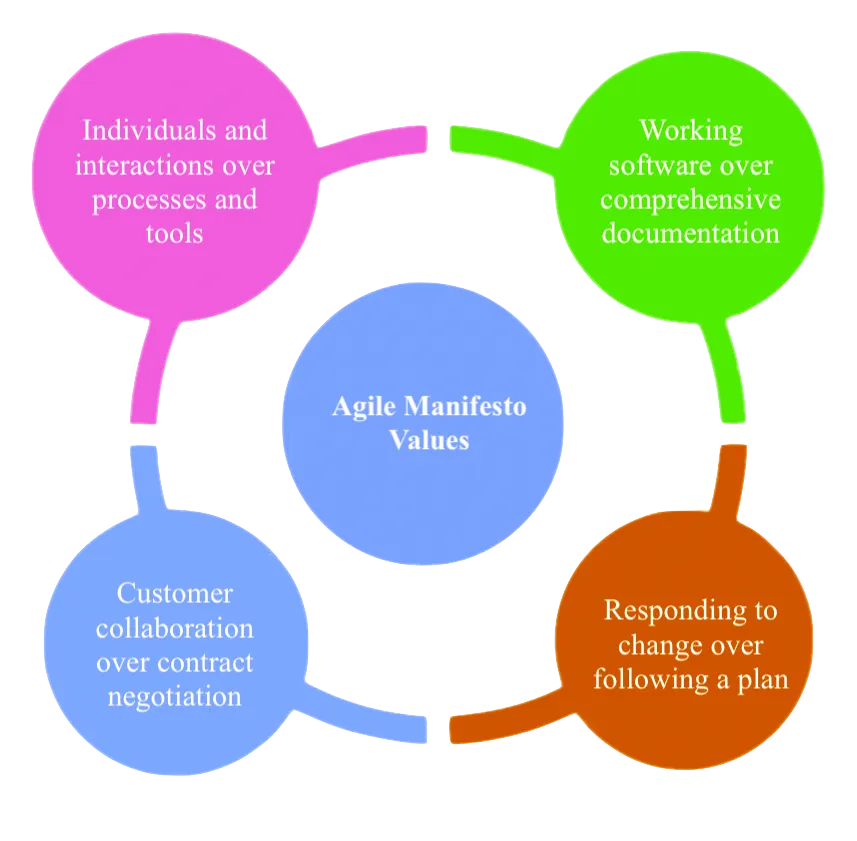
The Agile Manifesto is a document that identifies four key values and 12 principles that its authors believe software developers should use to guide their work.
Agile methodologies say the four values outlined in the Agile Manifesto promote a software development process that focuses on quality by creating products that meet consumers’ needs and expectations.
The 12 principles are intended to create and support a work environment that is focused on the customer, that aligns with business objectives and that can respond and pivot quickly as user needs and market forces change.
Four values of Agile:
Twelve Principles of Agile
Back in 2001 with the Agile Manifesto, there was a need for a new approach that can help organizations be more flexible, responsive, and adaptive to changes. The following 12 Principles are based on the Agile Manifesto.
- Our highest priority is to satisfy the customer through the early and continuous delivery of valuable software.
- Welcome changing requirements, even late in development. Agile processes harness change for the customer’s competitive advantage.
- Deliver working software frequently, from a couple of weeks to a couple of months, with a preference for a shorter timescale.
- Business people and developers must work together daily throughout the project.
- Build projects around motivated individuals. Give them the environment and support they need, and trust them to get the job done.
- The most efficient and effective method of conveying information to and within a development team is face-to-face conversation.
- Working software is the primary measure of progress.
- Agile processes promote sustainable development. The sponsors, developers, and users should be able to maintain a constant pace indefinitely.
- Continuous attention to technical excellence and good design enhances agility.
- Simplicity–the art of maximizing the amount of work not done–is essential.
- The best architectures, requirements, and designs emerge from self-organizing teams.
- At regular intervals, the team reflects on how to become more effective, then tunes and adjusts its behaviour accordingly.
Implementing the 12 principles of Agile will help your organization:
- Be more flexible so you can adapt to emerging changes in the process
- Reduce the waste in your system so you can make your workflow and final solution more cost-efficient
- Focus on early value delivery in order to get quick feedback from the market but also realize a faster ROI of your product/service
- Create a healthy working environment where everybody feels appreciated and thus better contributes to meeting customer’s requirements
Agile frameworks
An agile framework can be defined as a specific software-development approach based on the agile philosophy articulated in the Agile Manifesto. Various organizations use many popular frameworks. Organizations modify parts of the frameworks as they see fit and iterate on their own agile processes. Below are several commonly used and well-document frameworks for agile software development.
- Scrum
- Kanban
- eXtreme Programming (XP)
- Dynamic Systems Development Method (DDSM)
- Feature Driven Development (FDD)
- Adaptive Software Development (ASD)
- Crystal
- Lean Software Development (LSD)
- Disciplined Agile (DA)
- Scaled Agile Framework (SAFe)
- Rapid Application Development (RAD)
Agile team Key roles and responsibilities
An Agile team structure will commonly outline specific roles for each team member. While the focus is on a person’s skill set rather than their job title, a defined set of roles can create clarity in Agile workflows. Here are some of the key roles in an Agile team structure:
Scrum Master:- A Scrum Master is responsible for coordinating the team and ensuring that processes run smoothly. They will organize incoming requests, manage tasks, monitor workflows, and host meetings. They will also ensure the team is following the principles as outlined in the Agile Manifesto.
Product owner:- A product owner represents the needs of the client. Their job is to clearly outline the customer requirements and ensure they are met throughout the Agile project life cycle. They will communicate regularly with the team, offering guidance on features to include and informing them of what needs to be prioritized.
Team member:- Team member is a broad term that can denote the number of different roles across different industries. For example, an Agile development team will be made up of programmers, UX designers, software developers, and quality assurance testers. A digital marketing team, on the other hand, could include copywriters, editors, PPC managers, SEO specialists, and more. All of these people can be referred to as team members in an Agile team structure.
Stakeholder:- A stakeholder is not directly involved in the project activities, but they play an important role in determining the final deliverables. Stakeholders will liaise regularly with the team lead, product owner, and team members to offer input into the development process. Their feedback could significantly influence the end result of the project. Stakeholder examples include end-users, investors, and senior company executives.
Benefit of Agile in project
- Reduced Risk
- Improved Chances of Meeting Customers' Expectations
- Metrics for Efficiency and Data-Drive Decision Making
- Improved Performance Visibility & Transparency
- Better Team Collaboration and Continuous Improvement
- Focus on improvement and quality control
- Teams can deliver consistently and manage clients’ changing requirements effectively
- Easier to predict costs for shorter time periods than for a long-term project, simplifying the estimation process
- Regularly assess progress during sprints and have better visibility into the project and can spot potential obstacles quickly
Key Agile Concepts
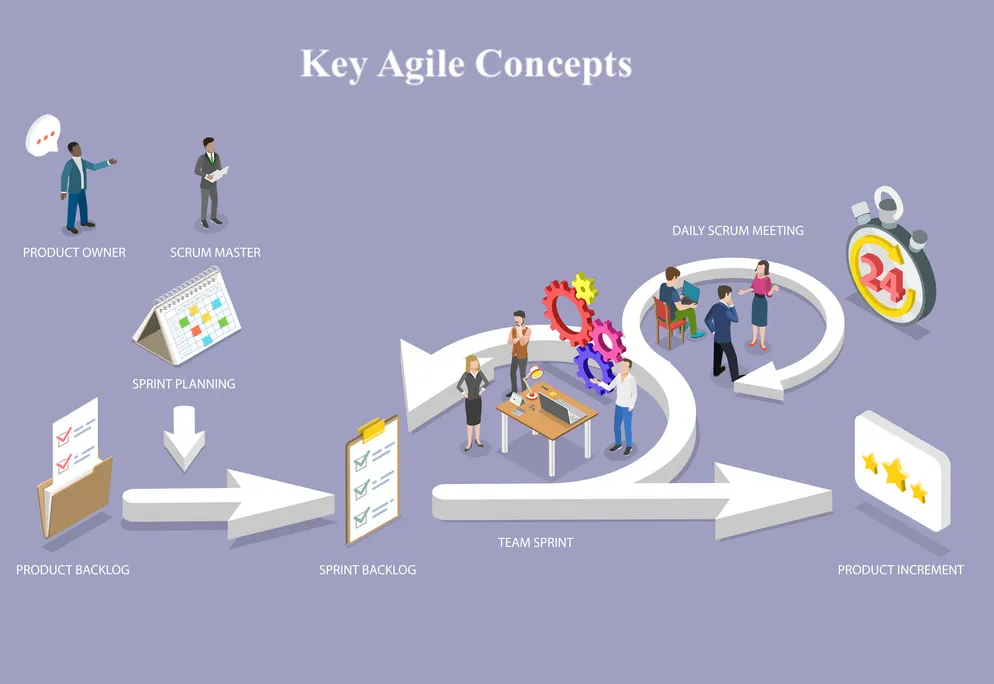
User Stories: A user story is the smallest unit of work in an agile framework. It’s an end goal, not a feature, expressed from the software user’s perspective. A user story is an informal, general explanation of a software feature written from the perspective of the end-user or customer.
Daily Meeting: The daily scrum, also called the standup, is a short daily meeting designed to let the team plan out its work for the day and identify any obstacles that could impact that work. Most teams hold these meetings in the morning and limit them to 10 or 15 minutes.
Team: An agile team is a group of specialized professionals having the right knowledge and experience required for executing projects using the agile methodology. An agile team has all the essential resources required to finish projects. The members of an agile team have everything they need to carry out different phases of a project, including the creation of a work breakdown structure (WBS), working on tasks, testing, deployment, and project closure.
Incremental Development: All Agile teams favour an incremental development strategy; in an Agile context, this means that each successive version of the product is usable, and each builds upon the previous version by adding user-visible functionality.
Iterative Development: Agile projects are iterative as they intentionally allow for repeating software development activities, and for potentially revisiting the same work products.
Milestone Retrospective: Once a project has been underway for some time, or at the end of the project, all of the team’s members invest from one to three days in a detailed analysis of the project’s significant events.
Conclusion
Agile methodologies are the conventions that a team chooses to follow in a way that follows Agile values and principles. Agile isn’t defined by a set of ceremonies or specific development techniques. Rather, agile is a group of methodologies that demonstrate a commitment to tight feedback cycles and continuous improvement. Teams choose agile so they can respond to changes in the marketplace or feedback from customers quickly without derailing a year’s worth of plans.